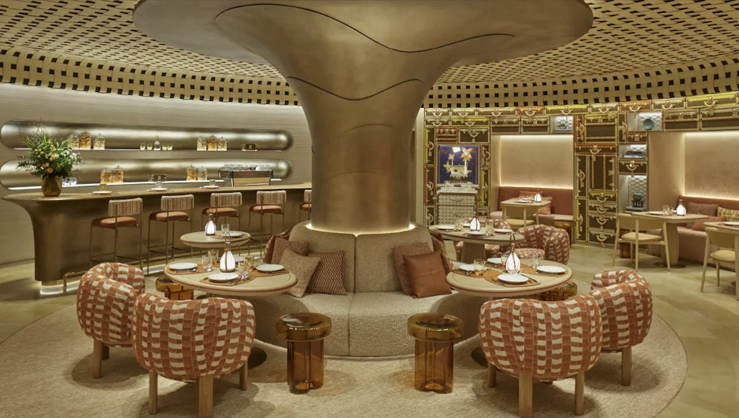

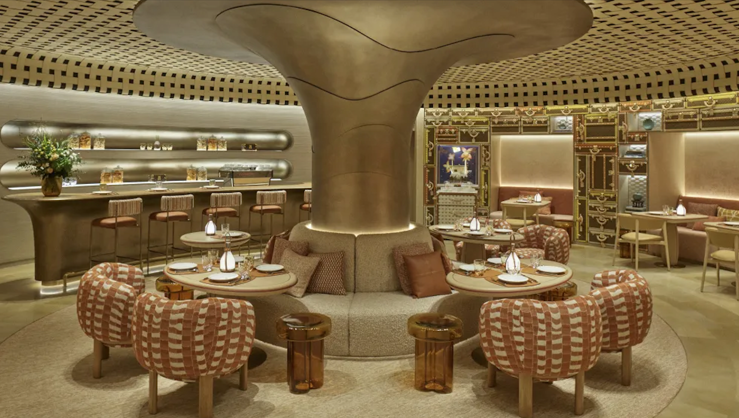
Image: The Café Louis Vuitton at LV The Place in Seoul.
Image credit: Courtesy of Louis Vuitton / WWD (2025).
Luxury retail is undergoing a major shift right now, and Louis Vuitton is at the forefront of it with great ambition. The opening of its new experiential flagship stores in Seoul and Beijing is more than just the opening of two impressive spaces. It demonstrates how luxury brands can create meaningful, immersive environments that inspire pride and confidence among industry professionals. These new flagship stores are less like stores and more like cultural spaces, carefully staged worlds that combine hospitality, art, technology, and storytelling into a single brand experience.
Luxury brands need to change with the times, and this move comes at a time when they need to do so. More and more, modern consumers, especially Gen Z and younger millennials, want places where they can interact with brands beyond just buying things. They want places that feel like movies. They want touchpoints that stick in their minds. And they want interactions that are warm, surprising, and fun, like a carefully planned lifestyle. In response, Louis Vuitton has created physical spaces that act as living extensions of its history, inspiring industry stakeholders with their innovative approach.
Making Shopping a Cultural Destination
Louis Vuitton is one of these new businesses. The Place Seoul is an excellent example of modern retailtainment. Instead of being a traditional boutique, the space is a multi-level journey where people can eat, explore, watch, learn, and experience. The Café Louis Vuitton is at the center of the building. It is a sculptural, futuristic lounge that combines soft, organic design with a clear sense of luxury. This café is the building’s emotional center, where the brand’s global identity meets the cultural sophistication of Seoul’s creative scene.
But the café is just one layer. Visitors to the building can see rotating exhibitions, archival displays, craftsmanship showcases, and themed rooms that give new meaning to Louis Vuitton’s history. Each section is designed to make people want to learn more and feel connected, so guests are encouraged to take their time, look around, and make their own creative connection with the brand. The flagship is like a stage where fashion, art, food, architecture, and memory all come together.
Redesigning a Maison for the Modern Luxury Shopper
Louis Vuitton takes a different approach to the experiential in Beijing. The redesigned Maison combines grandeur with intimacy to make a sophisticated space where the maison’s métiers: leather goods, fashion, jewelry, watches, and fragrance feel like separate worlds. Visitors’ walkthrough the space as if they are navigating a series of carefully chosen galleries, each showcasing the brand’s craftsmanship and evolving design language.
The Beijing flagship focuses on telling stories through objects and the way space is designed. High-art installations, archival icons, and handmade items all come together to show how the Maison has changed over time. The soft lighting, warm materials, and careful pacing all work together to make people feel calm and invite them to stay and take in each space. Instead of feeling like a store, the Maison feels like a private cultural home, inviting guests into the heart of Louis Vuitton’s creative world.
Why Experiential Flagships Are Important in Fashion Today
These flagships are essential for more than just their appearance. They respond to changes in theglobal luxury market, where traditional stores struggle to compete with the convenience of onlineshopping. However, implementing such experiential spaces requires significant investment and market-specific customization. Understanding local cultural nuances and consumer preferences is crucial to ensuring these flagships resonate effectively and justify their costs.
So, experiential flagships are like powerful emotional theaters. They put visitors in an environment where every detail, from the lighting to the seating to the music, reinforces the brand. These immersive environments foster long-term loyalty by creating memorable, emotional connections that extend beyond immediate purchases, helping brands like Louis Vuitton build enduring relationships with customers. They also play an essential role in shaping cultural presence.
When a flagship has cafés, exhibitions, workshops, digital activations, and seasonal installationsall in one place, it becomes a place where people want to share their experiences on social mediaand in person. Metrics such as social media engagement, foot traffic, and customer retention rates help measure how effectively these flagships enhance brand visibility and loyalty.
Most importantly, these spaces allow luxury brands to shift from one-way messaging to immersive, multi-sensory storytelling. Instead of telling customers who they are, brands like Louis Vuitton show it through texture, design, and curated environments that communicate heritage, innovation, and artistry in ways words alone never could. This approach invites industry professionals to feel inspired by the depth and richness of the brand’s storytelling.
The Experience as the New Luxury
What stands out most about Louis Vuitton’s experiential strategy is its embrace of slowness. Guests are encouraged to spend time exploring at their own pace and to absorb layers of meaning. This creates a sense of intimacy between the visitor and the brand, an emotional connection that is impossible to recreate through digital screens or traditional retail racks. In Seoul, someone may begin their visit with a quiet coffee under a sculptural ceiling, wander through archival displays, discover a collaborative art installation, and browse limited-edition accessories.
In Beijing, they may learn about the creation of a leather trunk, then step into a contemporary fashion universe, and then find themselves surrounded by high jewelry craftsmanship. Each journey feels personal and unpredictable, allowing the brand to occupy not just physical space but also emotional space in visitors’ minds. Luxury, after all, is no longer defined by rarity alone. It is increasingly defined by atmosphere, experience, and cultural relevance. Louis Vuitton’s experiential flagships represent this shift with exceptional clarity.
The Future of Retailtainment in Fashion
Louis Vuitton is not the only brand exploring this territory, but its approach is among the most fully realized. Other houses, from Gucci to Dior to Burberry, are experimenting with cafés, immersive museums, and pop-up installations. Yet Louis Vuitton’s commitment to building permanent, multi-functional cultural destinations place it at the forefront of this movement.
Experiential flagships may soon become a defining characteristic of luxury, particularly as more brands seek to create spaces that inspire, educate, and engage. As digital commerce grows, brands must give consumers reasons to re-enter the physical world. The future of luxury retail will likely be shaped by spaces that prioritize emotion over efficiency, and engagement over transaction.
With its new Seoul and Beijing flagships, Louis Vuitton offers a clear vision of what that future can look like: a world where fashion is experienced rather than purchased, where retail becomes culture, and where the store itself becomes a form of storytelling.
Arman POUREISA
Marketing Manager
References
Baigorri, M. (2025). Louis Vuitton opens experiential flagships in Seoul and Beijing. WWD .
McKinsey & Company. (2025). State of Fashion 2025: Experience-first luxury.
https://www.mckinsey.com/industries/retail/our-insights/state-of-fashion
Bain & Company. (2025).Luxury Goods Worldwide Market Study—Spring Update.
https://www.bain.com/insights/
Deloitte (2025). The experiential retail revolution: What next for luxury?
https://www2.deloitte.com/global/en/pages/consumer-business
Business of Fashion. (2025). How experiential flagships are redefining luxury retail.
https://www.businessoffashion.com/articles/retail
Vogue Business (2025). Inside the rise of retailtainment in Asia.
https://www.voguebusiness.com/retail
Forbes. (2025). Why Gen Z prefers experiential luxury.
Kearney. (2025). The future of physical retailing the experience economy.
https://www.kearney.com/consumer-retail
Euromonitor International (2025). Luxury consumer trends shaping 2025.
Harvard Business Review. (2024). Why experiential branding wins in a digital world.